

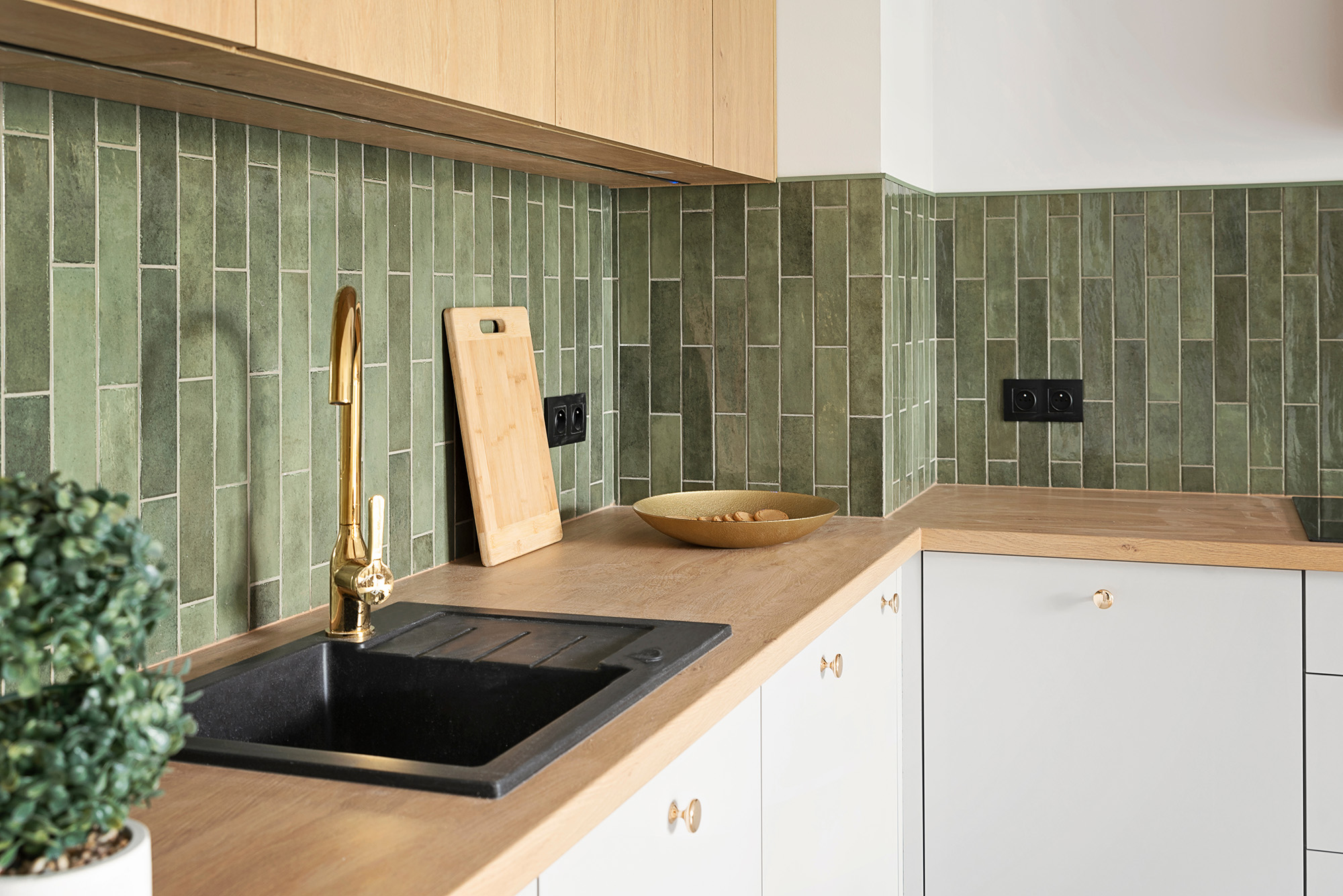
The kitchen backsplash protects the wall behind your sink, cooktop, and preparation areas, but it also has a strong influence on the room's overall design. Subway tile has a familiar, versatile look, while large-format tile creates a more continuous surface with fewer grout lines. Both can work beautifully, depending on your kitchen layout, cleaning preferences, and preferred style.
When comparing kitchen backsplash tile, consider more than the tile's shape. Size, grout color, installation details, and the relationship between the backsplash and countertop all affect the finished result.
Subway Tile: A Flexible Choice for Different Kitchen Styles
Subway tile is popular because its simple rectangular shape works across a wide range of interiors. Traditional white tile can create a bright, classic backsplash, while colored, handmade-look, or elongated versions offer a more distinctive appearance.
The layout changes the effect. A standard running-bond pattern feels familiar, while vertical stacking can create a more contemporary look. Herringbone adds movement, although it requires more detailed cutting and installation.
These variations make subway tile a useful option when you want a backsplash with visual interest without choosing an elaborate pattern. The main consideration is grout. Smaller tiles generally create more grout joints, which can require additional cleaning, particularly near cooking and food-preparation areas.
Choosing a suitable grout and following the manufacturer's care guidance can help maintain the appearance. Subway tile also makes it easier to work around outlets, corners, and irregular wall dimensions, although careful layout planning is still essential.
Large-Format Tile: Fewer Grout Lines, More Visual Continuity
Large-format tile can make a backsplash feel streamlined because fewer individual pieces cover the wall. Depending on the product, you can find subtle stone-inspired patterns, concrete-like finishes, and other designs that coordinate with modern or transitional kitchens.
Fewer grout joints may make routine cleaning easier, but they do not eliminate maintenance. Grease and splashes still need to be wiped away, and the grout lines that remain must be installed and cared for properly.
Large-format tile requires a flat, appropriately prepared surface. The pieces can be heavier and more difficult to handle, and cuts around outlets, windows, cabinets, and corners demand careful planning. A poorly prepared wall can contribute to uneven edges or an unattractive finished surface.
If you like the look of continuous stone or a minimal pattern, large-format tile may be worth considering. Ask about the product's size, thickness, edge treatment, and installation requirements before making a decision.
How Tile Size Changes Cleaning and Everyday Use
Both subway and large-format tile can be suitable for kitchens when installed with appropriate materials and methods. Your cleaning routine depends on the tile surface, grout selection, location, and amount of cooking you do.
Textured tile may provide visual depth, but deep texture can collect grease more readily than a smooth surface. Highly polished surfaces can reflect light beautifully, although they may show smudges or splashes depending on their color and finish.
Grout color also affects the practical result. A close match can create a continuous appearance, while contrasting grout emphasizes the pattern. Neither approach is automatically easier to maintain, since staining and discoloration depend on the grout type, sealant where applicable, and cleaning habits.
For areas directly behind a cooktop or sink, prioritize a surface that can be cleaned using products approved for the tile and grout. Regular wiping helps prevent grease and food residue from becoming harder to remove.
Backsplash Ideas 2027: Coordinate Tile With the Whole Kitchen
Backsplash ideas 2027 can provide inspiration for colors, shapes, and combinations, but your selection should make sense with the other permanent finishes in the room. A dramatic tile can become the focal point, while a simpler backsplash lets distinctive countertops or cabinetry take the lead.
Start by comparing the tile with your countertop sample and cabinet color. Warm stone patterns often pair naturally with wood tones, while crisp whites and cooler neutrals may suit a different palette. Lighting matters, too. A tile that appears bright in a showroom may look warmer or darker in your kitchen.
Think about how much wall area will be covered. A small backsplash may benefit from a more decorative pattern, while a large uninterrupted wall can make oversized tile particularly effective.
Before installation, confirm the planned layout around outlets, cabinet edges, and windows. A carefully placed tile pattern can make the kitchen feel intentional rather than crowded.
Find the Right Kitchen Backsplash Tile for Your Space
Subway tile offers flexibility, familiar proportions, and plenty of pattern choices. Large-format tile creates a cleaner visual field with fewer grout lines, but it requires careful surface preparation and precise installation. Your best choice depends on the style you want, the size of the backsplash, and the amount of maintenance you are comfortable with.
At Greenwood Cabinets & Stone, Inc., you can explore tile and flooring options while considering how the finishes work together throughout your home. Bring countertop samples or kitchen photos to help compare colors and textures.
Visit our showroom at Littleton, CO to review materials and discuss ideas for your kitchen backsplash. If you are ready to plan an update, contact us today to talk through your project and arrange an in-home measurement and estimate where appropriate.